
Damp and moisture in older properties
Ground floor damp in older properties
Damp at ground level is common in older buildings and is not usually the result of a single point of water ingress. In many cases, moisture is present within the wall itself, moving slowly through masonry rather than entering from above or externally.
Most period properties were built without damp-proof courses, membranes or sealed floors. Instead, they relied on the ability of walls and floors to absorb and release moisture gradually. This behaviour was expected and accounted for in the original construction.
Where moisture appears concentrated at the base of a wall, it is often because that natural movement has been restricted elsewhere.
Materials and moisture movement
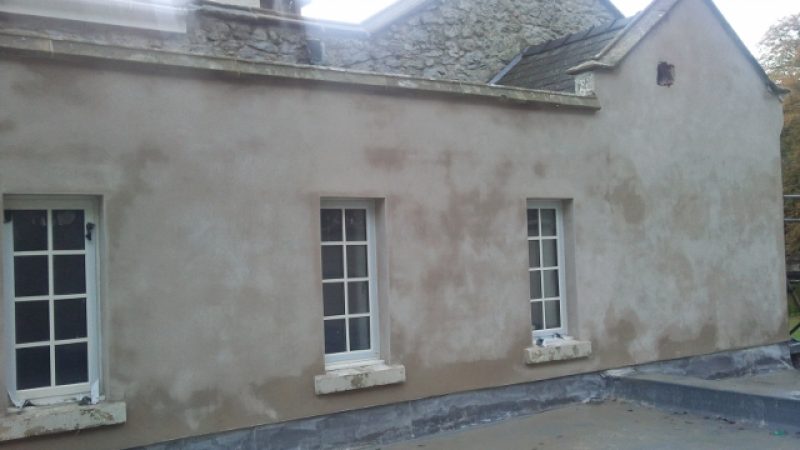
Modern interventions can alter how an older wall behaves. Cement renders, hard plasters and non-breathable finishes reduce the wall’s ability to disperse moisture. When this happens, moisture is retained lower down, where evaporation is slowest.
This can present as persistent dampness, staining or deterioration at ground level, even when there is no active water source.
How this is addressed
Work is focused on restoring the wall’s ability to regulate moisture rather than introducing new barriers or chemical systems.
This typically involves the removal of modern cement-based materials and their replacement with lime-based renders or plasters that allow moisture to move and dissipate naturally. External ground levels, internal finishes and floor junctions are assessed as part of the same system.
Each property is considered on its own construction and history, rather than treated as a standard defect.